Best Leg Exercises for Beginners
An easy, science-based guide for students
Leg exercises strengthen the muscles in your thighs, hips, and glutes. They can also help you move confidently in everyday activities, sports, and games. You don’t need heavy weights to begin: body-weight exercises can help you learn the movements first.
Body-weight squat illustration.
1. Squats
Squats work the muscles at the front of your thighs and your glutes.
- Stand with your feet about shoulder-width apart.
- Bend your knees and move your hips back, as if sitting on a chair.
- Keep your feet flat and lower only as far as you can comfortably control.
- Stand back up smoothly.
Try 1–2 sets of 8–12 repetitions. A repetition is one complete movement; a set is a group of repetitions.
2. Glute Bridges
Glute bridges work your glutes and the backs of your thighs.
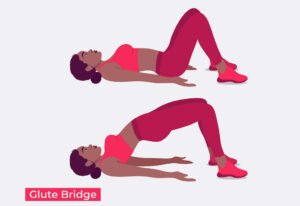
Glute bridge illustration.
- Lie on your back with your knees bent and feet flat on the floor.
- Tighten your glutes and lift your hips.
- Pause briefly, then lower your hips slowly.
Try 1–2 sets of 10–15 repetitions. Lift only as high as you can without arching your lower back.
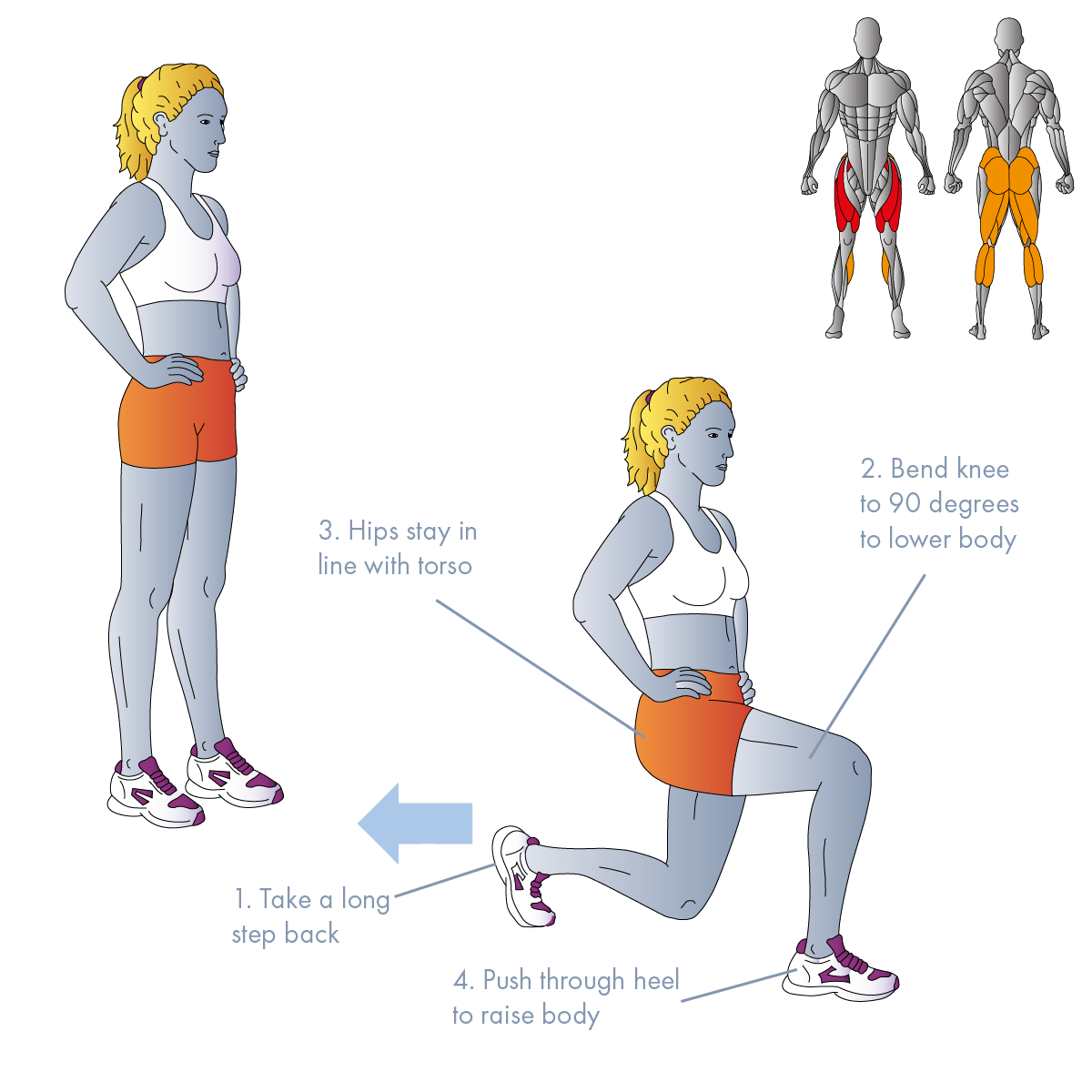
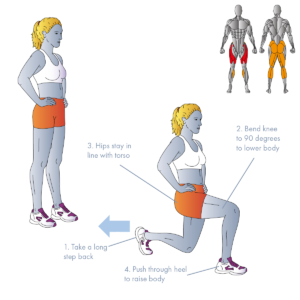
3. Reverse Lunges
Reverse lunges work your thighs and glutes, one leg at a time. They also challenge your balance.
Reverse lunge illustration.
- Stand tall and step one foot backward.
- Bend both knees a comfortable amount while keeping your balance.
- Push through your front foot to return to standing.
- Repeat on the other side.
Try 1–2 sets of 6–10 repetitions per leg. Hold a sturdy support if you need help balancing.
A Simple Beginner Workout
Try these exercises in order:
- Squats: 8–12 repetitions
- Glute bridges: 10–15 repetitions
- Reverse lunges: 6–10 per leg
Start with one round. If the movements feel comfortable and controlled, try a second round. Rest when you need to.
How Often Should You Exercise?
For teenagers, the U.S. activity guidelines recommend at least 60 minutes of physical activity each day, including muscle- and bone-strengthening activities on at least 3 days a week. That activity can include sports, active play, and other movement; it doesn’t mean doing this leg workout every day. If you’re new to strength exercises, start with two short sessions on nonconsecutive days and ask a coach, PE teacher, or other qualified adult to help you learn good form. CDC activity guidelines and American Academy of Pediatrics guidance
Key Safety Tips
- Learn the movement before adding weight.
- Move with control and use a comfortable range of motion.
- Stop if you feel sharp pain or feel unwell.
- Build up gradually rather than suddenly adding lots of repetitions or weight.
- Ask a qualified adult to supervise if you’re learning strength training.
There isn’t one best exercise for everyone. Squats, bridges, and lunges train different muscles, so combining them makes a useful beginner routine.